
Offline writing and privacy
Offline writing, privacy and backups you understand
What local-first really means and how to protect a manuscript without a permanent connection.
Inkthar Editorial
· 2026-06-22 · 7 min read
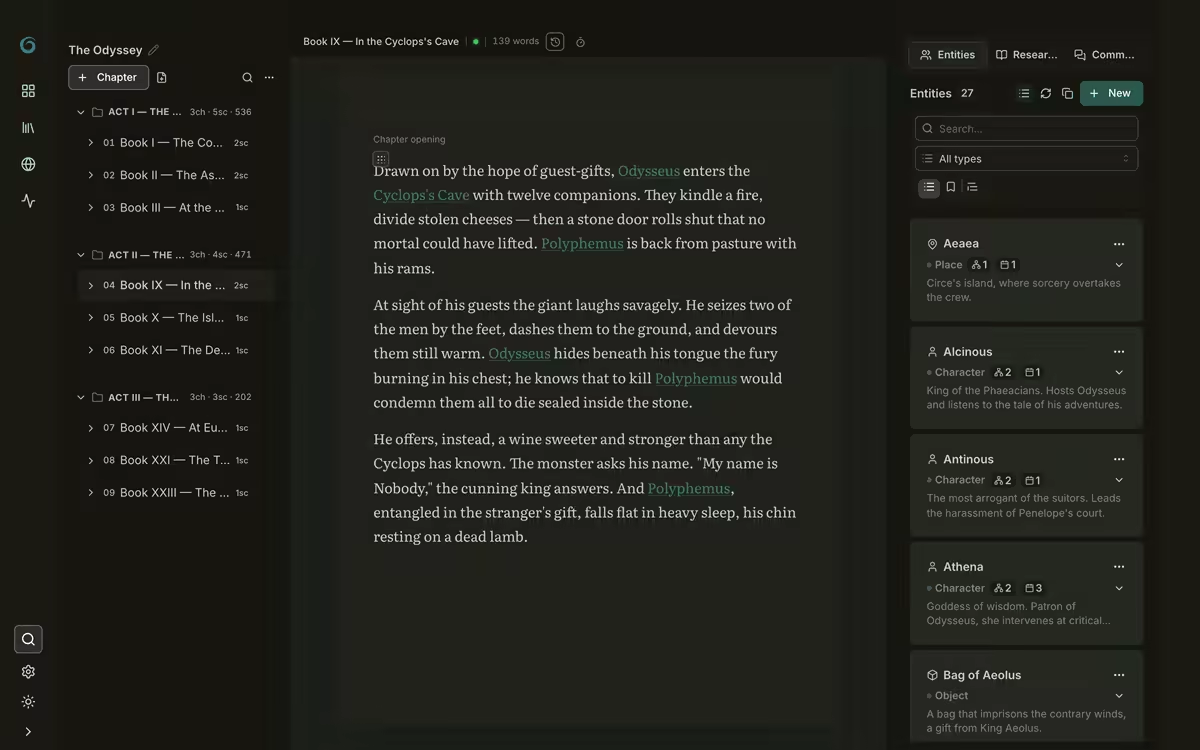
Offline means more than airplane mode
An offline writing tool should let you open, draft, search the project and export without a connection. In local-first products, the primary copy lives on the computer and external services are optional additions. This reduces server dependence and makes the location of the manuscript clearer.
Ask which features stop without internet. Activation, updates or online research may use the network without blocking the core writing workflow. That boundary should be explicit before travel or an outage tests it for you.
Privacy is a data flow
It is not enough for a product to say it respects privacy. You need to know what leaves the device, why and for how long. AI, sync and analytics features may transmit content or metadata. Prefer tools that describe those operations and allow you not to use them.
For sensitive material, keep the operating system updated, protect the account and enable disk encryption. Security also depends on the local environment, not only the application.
The 3-2-1 rule for manuscripts
Local data needs backup. The 3-2-1 rule recommends three copies on two kinds of media, with one away from the primary device. A simple combination is the working project, an automatic external-drive copy and an exported file in remote storage.
Test restoration. A backup that has never been opened is a hope, not a guarantee. Regularly recover a copy into a separate folder and verify chapters, images and special characters.
- Enable automatic system backups
- Export versions in a common format
- Use understandable names or dates
- Avoid incompatible sync methods on open project files
A small, reliable ritual
After an important session, save, export and confirm backup status. Before major structural revisions, create an identifiable version. The calm of offline writing comes from combining autonomy with discipline: you control the files and how they survive.