
Novel-writing software
How to choose novel-writing software
A practical framework for comparing editors, scene organizers and story-planning tools around your actual writing process.
Inkthar Editorial
· 2026-06-22 · 8 min read
Start with your process, not a feature list
The best novel-writing software is not necessarily the product with the most controls. It is the one that shortens the distance between an idea and a consistent writing session. Before comparing tools, describe how you work: do you outline, discover the story while drafting, or move between both modes? Note where friction usually appears—continuity, research, characters, revision or distraction.
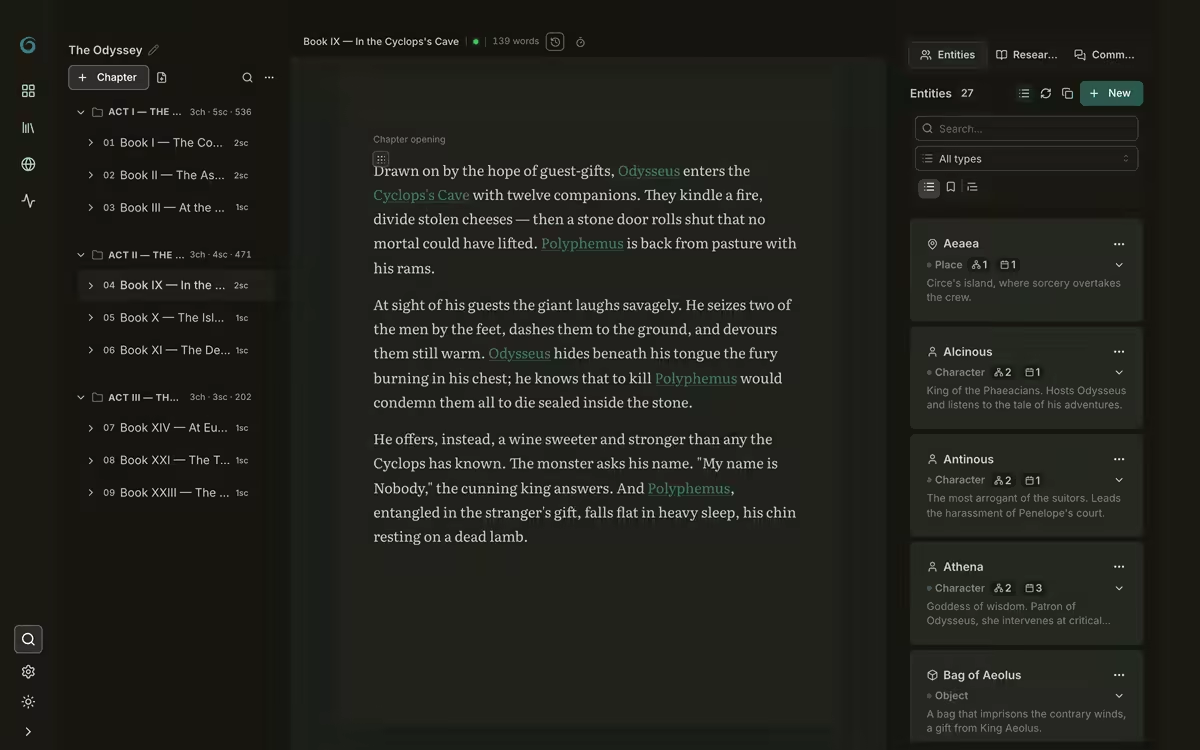
A general editor handles linear text well. A long project often needs a view of chapters, scenes, notes, goals and reference material. Specialized software becomes valuable when those parts stay close to the manuscript without turning every session into system administration.
- Fast writing and navigation
- Chapter and scene structure
- Research connected to the project
- Reliable export and portable data
Test it with a real chapter
Polished demos hide friction that appears only in use. Import or recreate a real chapter, move scenes, search for a name, close the app and open it again. Then export the work. This reveals whether formatting survives, navigation remains clear and file storage makes sense.
Watch the cognitive cost. If a frequent action requires several panels, special syntax or a permanent connection, it will charge interest over months. Advanced features are most useful when they remain optional and do not interrupt drafting.
Privacy, pricing and longevity
Manuscripts contain unpublished work and sometimes sensitive research. Check whether data stays local, whether backups are understandable and when external services are used. Cloud storage is not automatically safe, and offline software still needs backups.
Compare cost across two or three years and confirm what happens if payment stops. A one-time purchase offers predictability; a subscription can make sense when it funds sync or ongoing services you use. In either model, common export formats should preserve your exit.
A simple decision
Choose the tool that makes the next chapter easier and keeps the project understandable as it grows. Run a short trial with real work, verify export and backup, and avoid migrating during a critical phase without copies. Writing software should support the book, not become the book.