
Story timeline
Story timelines: continuity without confusion
How to separate event chronology, scene order and character knowledge in complex stories.
Inkthar Editorial
· 2026-06-22 · 8 min read
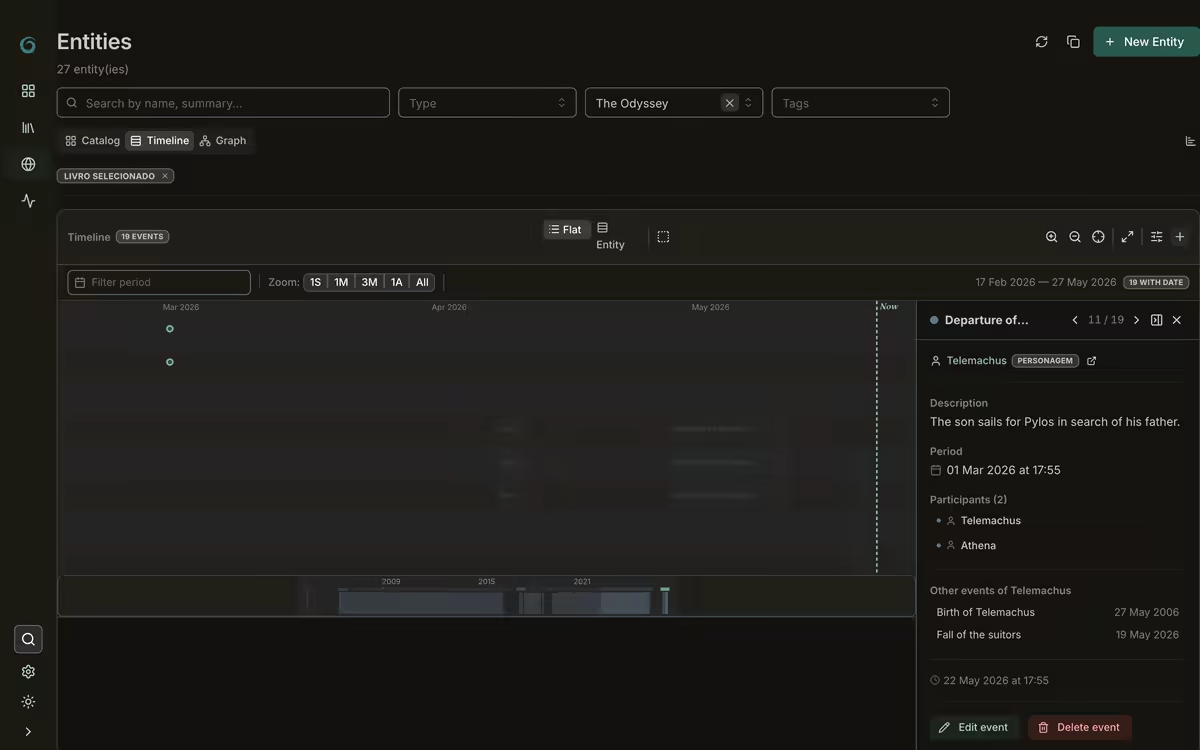
Two different orders
Every narrative has at least two timelines: the chronology of the world and the order in which readers receive scenes. Flashbacks, prologues and alternating narrators make them diverge. Recording both prevents deliberate structure from being “fixed” as an error and makes genuine contradictions easier to spot.
Use exact dates when duration, travel, age or a calendar matters. When it does not, relative markers such as “three days later” preserve flexibility and reduce maintenance.
Events, scenes and consequences
An event happens in the story world; a scene is the unit through which a reader witnesses or learns about it. A murder may occur Monday and be revealed in a Thursday scene. Keeping that distinction allows clues, secrets and conflicting accounts to remain coherent.
For each critical event, note cause, participants, witnesses and consequences. Then connect the scenes that present it. Gaps become visible: a consequence lacks a cause, someone knows too much too soon, or travel takes an impossible amount of time.
- When it happened
- When it was shown
- Who participated
- Who learned it and in which scene
- What changed
Do not let the calendar become a cage
A timeline should answer questions, not demand precision the book never promises. Avoid filling every breakfast and empty afternoon simply to eliminate gaps. Readers accept ellipsis when emotional and causal progression stays clear.
Work in levels: major events first, travel and deadlines second, fine detail during continuity revision. Large structural changes then do not require recalculating hundreds of entries.
The final continuity pass
Filter events by character and verify age, location, injuries, objects and available information. Then read scenes in narrative order. Chronology can be correct and still confuse readers if transitions are weak. The goal is not a perfect spreadsheet; it is a story where time creates tension without accidental noise.