
Character organization
How to organize characters without freezing the story
A lightweight structure for tracking identity, relationships, arcs and appearances across a manuscript.
Inkthar Editorial
· 2026-06-22 · 7 min read
Record story decisions, not endless biographies
Character sheets can become sophisticated procrastination. The most useful record contains what changes scenes: desire, fear, contradiction, voice, relationships and the expected movement across the book. Eye color matters when it creates a consequence; otherwise it can wait.
Start with a minimum profile and expand it when the manuscript asks for more. Documentation then remains connected to actual pages instead of accumulating details that never enter the story.
- Function in the story
- Goal and obstacle
- Central contradiction
- Relationships that change
- Opening and closing state
Use relationships as conflict
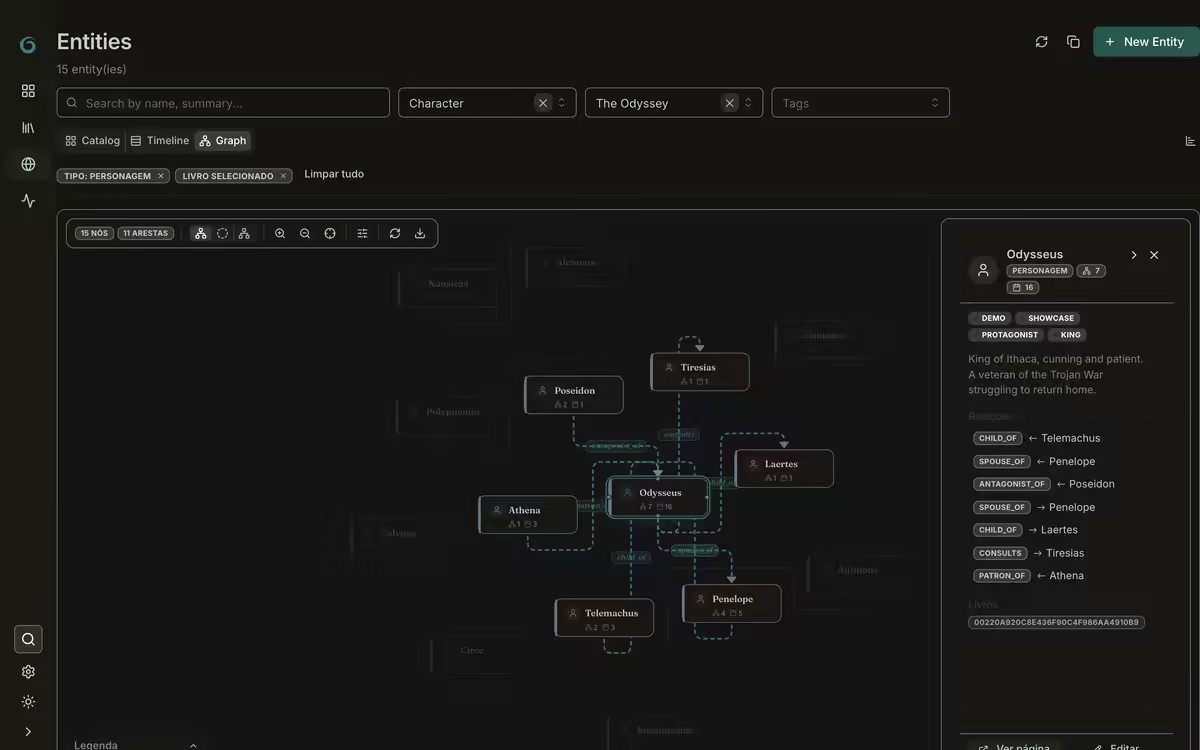
Characters do not exist alone. Record what each person believes about the other because asymmetric relationships create tension: one trusts while the other suspects; one protects while the other feels controlled. A graph can expose disconnected groups and characters performing duplicate functions.
Review relationships after major plot turns. A revelation should change behavior, language or access to information. If nothing changes, the revelation may not yet carry dramatic weight.
Connect profiles to scenes
Organization becomes useful when you can answer where a character appears, what they know at that point and when their position changes. Automatic mentions or tags reduce continuity risk, but they do not replace reading. Use them as a map for reviewing appearances and absences.
For a large cast, filter by group, location or period. This shows when an arc disappears for too long and helps plan a return without distributing page time mechanically.
Audit the arc
After a draft, list three points for each major character: opening state, irreversible decision and final state. Visit the scenes supporting those points. Does change arise from choices and consequences? If the profile describes an arc the text never performs, trust the manuscript and revise the plan—or rewrite the scenes meant to carry it.